-
Shop
- Adidas
- Advanced Technologies
- Best-Sellers
- Car Accessories
- Dating & Social Skills
- Digital Resources
- AI & Technology
- AI Skills
- Beauty
- Budgeting & Saving
- Car Buying & Ownership
- Cozy Feast Collection
- Electronics & Technology
- Emotional Intelligence
- Entrepreneurship & Business Growth
- Financial Education
- Financial Independence
- Financial Mindset & Psychology
- Goal Setting
- Home Styling & Organization
- Kitchen & Recipes
- Leadership
- Mindfulness
- Mindset
- Motivation
- Online Business
- Parenting & Child Development
- Personal Style & Fashion
- Pet Lifestyle & Wellness
- Positive Thinking
- Productivity
- Self Confidence
- Sleep Improvement
- Smart Life with AI
- Stress Management & Relaxation
- Travel Planning
- Wellness
- Yoga & Fitness
- Yoga & Mind-Body Practices
- Education & Learning
- Family & Parenting
- Fashion
- Accessories
- Alexander McQueen
- Bags
- Bags & Wallets
- Balenciaga
- Belts
- Blazers
- Blouses & Shirts
- Bottega Veneta
- Bottoms
- Brunello Cucinelli
- Burberry
- Chanel
- Chloé
- Clothing
- Dior
- Dolce & Gabbana
- Dresses
- Etro
- Fendi
- Gucci
- Hats & Hair Accessories
- Hoodies & Sweatshirts
- Jacquemus
- Jewelry
- Jil Sander
- Keychains
- Kiton
- Luggage
- Luggage Bags
- Miu Miu
- Off-White
- Outerwear
- Prada
- Rick Owens
- Saint Laurent
- Shoes
- Socks & Tights
- Sweaters & Cardigans
- The Row
- Tom Ford
- Tops & Shirts
- Valentino
- Valentino Garavani
- Versace
- Vivienne Westwood
- Watches
- Furniture
- Gadgets
- Health & Beauty
- Health & Wellness
- Home & Garden
- Kids & Babies
- Kitchen
- Kitchen Best-Sellers
- Lighting
- Patio, Lawn & Garden
- Personal Growth
- Pet Care
- Pet Supplies
- Pets
- Smart Amazon Shopping
- Sport & Outdoors
- Travel
- Wealth
- Popular
- Best deals
Lower Back Pain at Night: Sleep Positions & Checklist
Why lower back pain can feel worse at night
Lower back pain often feels louder at bedtime—not always because the back is “getting worse,” but because sleep can magnify what the body has been tolerating all day. When you stay still for hours, tissues that prefer gentle movement (muscles, joints, and connective tissue) can stiffen, especially after a day of sitting, driving, or limited walking.
Position matters, too. Some sleep postures push the lumbar spine into an exaggerated arch or an over-rounded shape, which can irritate sensitive joints, discs, or tight muscles. Your mattress and pillow setup can either support a neutral spine or let the hips sink and twist, increasing strain. Stress also plays a role—poor sleep can heighten pain sensitivity, making mild discomfort feel more intense and more likely to wake you.
If morning pain is a pattern, it’s usually influenced by both nighttime setup and daytime habits (lifting mechanics, sitting posture, activity level). The good news: small, repeatable changes often improve sleep quality within 1–2 weeks.
Quick safety check: when to get medical help
Some symptoms need urgent evaluation rather than DIY sleep tweaks. Seek urgent care for new bladder or bowel control issues, numbness in the groin/saddle area, or rapidly worsening weakness. Get prompt assessment for fever, unexplained weight loss, recent significant trauma, a cancer history, or pain that doesn’t improve with basic care and rest.
If pain radiates below the knee with numbness/tingling or noticeable strength changes, consider evaluation for nerve involvement. If pregnancy, osteoporosis, or chronic steroid use is present, discuss new or persistent night pain with a clinician sooner. For general background on causes and warning signs, see NIH MedlinePlus — Back Pain and Mayo Clinic — Back pain: Symptoms and causes.
Sleep positions that reduce strain (with pillow placements)
The goal is simple: keep the spine as neutral as possible and reduce pressure on hot spots. Use pillows as “braces” to prevent the hips and knees from drifting into positions that tug on the low back.
Back sleeping
Place a pillow under the knees to reduce lumbar arching and relax hip flexors. Keep the head pillow height neutral—too high can round the upper spine and subtly change rib and pelvis alignment, which can cascade into the low back.
Side sleeping
Use a pillow between the knees and ankles to keep the hips level and prevent the top leg from sliding forward (a common pelvis-twisting culprit). If there’s a gap between your waist and the mattress, add a small pillow or folded towel at the waist to avoid side-bending all night.
Gentle fetal curl
A mild fetal position can help some people (often those with stenosis-like symptoms). Keep the curl gentle—over-curling can round the lower back too much and increase morning stiffness.
Stomach sleeping (modified)
Stomach sleeping often aggravates the low back because it encourages an excessive arch and neck rotation. If it’s your only comfortable option, place a thin pillow under the pelvis/lower abdomen and keep the head turned as little as possible.
Turning in bed
| Position | Best for (often) | Pillow setup | Common mistake to avoid |
|---|---|---|---|
| On back | General low back discomfort; muscle tightness | Pillow under knees; optional small lumbar support | Pillow too high under head causing rounded upper spine |
| On side | Many people with sciatica-like symptoms; pregnancy-friendly | Pillow between knees/ankles; optional waist support | Top knee sliding forward twisting the pelvis |
| Gentle fetal | Some with stenosis symptoms | Knee pillow; keep curl mild | Over-curling and tucking knees tightly |
| On stomach (modified) | Only if it’s the only comfortable option | Thin pillow under pelvis; very low/none under head | Excessive lumbar arching and head rotation |
Mattress, pillow, and bedroom setup that supports the spine
A simple evening routine to settle the back and calm the nervous system
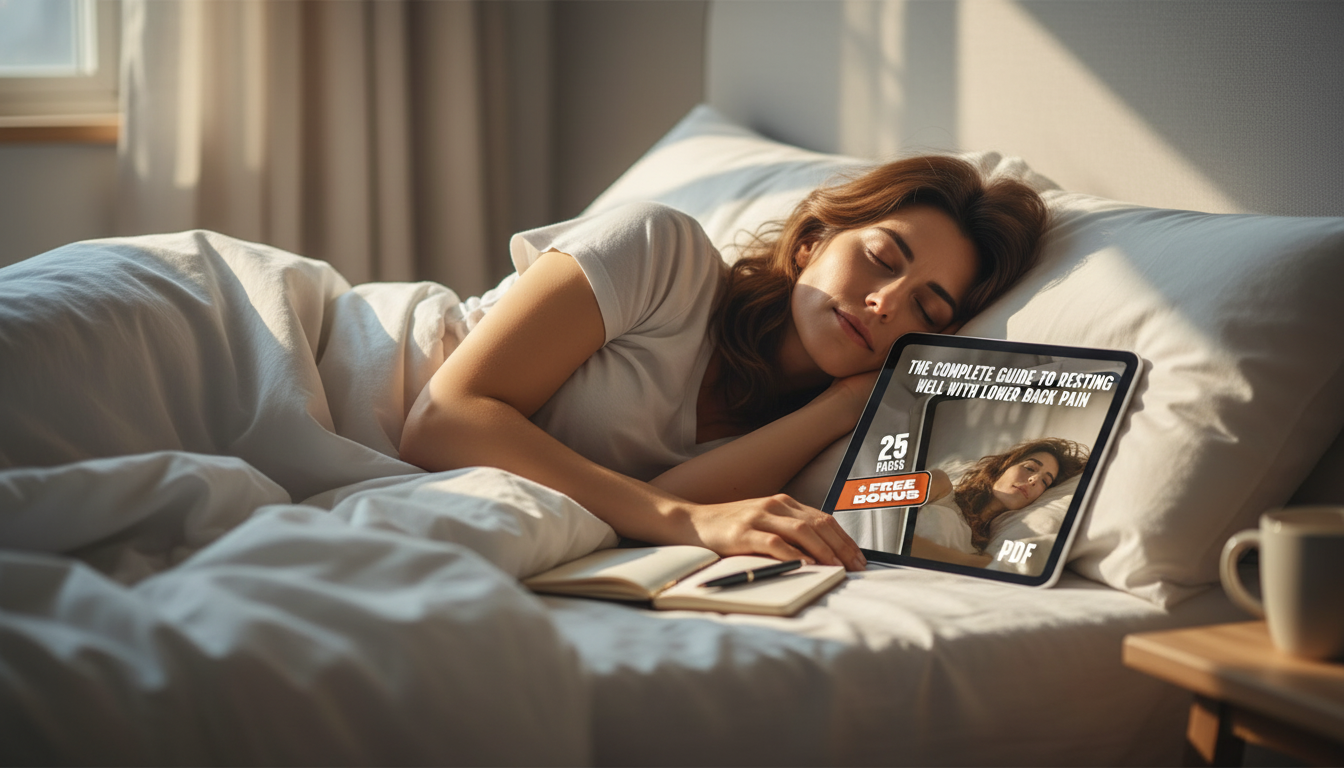
For position ideas and a repeatable routine you can use nightly, consider The Complete Guide to Resting Well with Lower Back Pain | Sleep Better eBook for Lower Back Pain Relief | How to Sleep with Lower Back Pain Tips & Checklist, which lays out a step-by-step plan and checklist format.
Nightly checklist for fewer wake-ups
| Step | Done | Notes |
|---|---|---|
| Pillows placed (knees/between knees/waist support) | [ ] | |
| Room cool and dark; phone on do-not-disturb | [ ] | |
| 5–10 minutes gentle mobility or heat (if helpful) | [ ] | |
| Relaxation breathing (2–5 minutes) | [ ] | |
| Plan for nighttime flare (heat/topical/water ready) | [ ] |
Using a guided plan and checklist to stay consistent
Consistency usually beats big one-off changes. If symptoms change (new radiating pain, numbness, weakness), adjust the plan and seek clinical guidance. For day-to-day movement ideas that support back comfort (without overdoing it), Move More Outdoors with AI Fitness | Smart Guide for ai outdoor workout ideas, Outdoor Training Plans, AI-Powered Fitness Inspiration can help you map gentle activity that complements a better night setup.
For additional sleep-position context, Sleep Foundation — Best Sleeping Position for Lower Back Pain is a helpful overview to compare what you’re trying.
FAQ
What is the best sleep position for lower back pain?
Often, back sleeping with a pillow under the knees or side sleeping with a pillow between the knees/ankles works well. The best choice is the one that keeps your spine neutral and consistently reduces symptoms through the night.
Should a mattress be firm or soft for lower back pain?
A supportive, pressure-relieving feel—commonly medium to medium-firm—works for many people. Avoid excessive sink at the hips or intense pressure points at the shoulders and hips.
What can help when lower back pain wakes someone up at night?
Shift to a more neutral position, add or adjust pillows, and do a short relaxation or breathing reset. Keeping a simple flare plan nearby (like approved heat or topical support) can shorten wake time and help you fall back asleep.
















Leave a comment